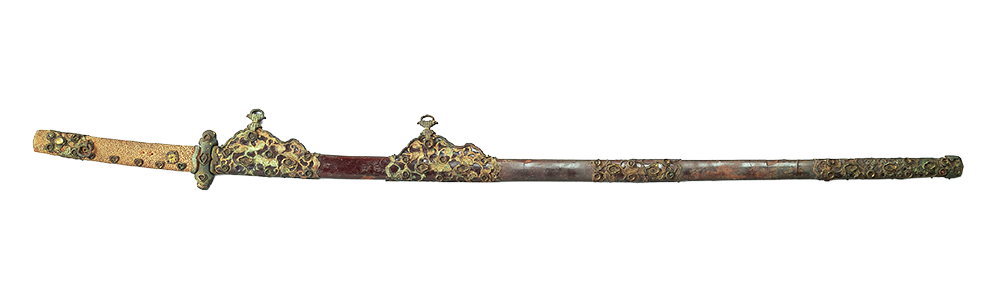
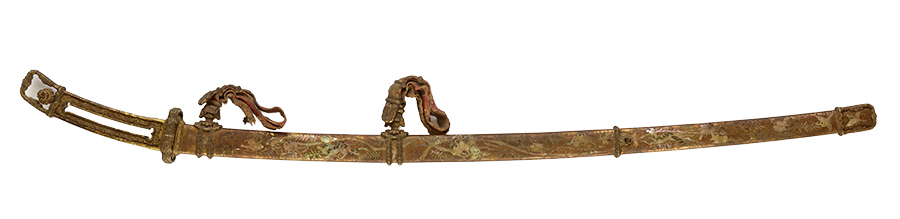
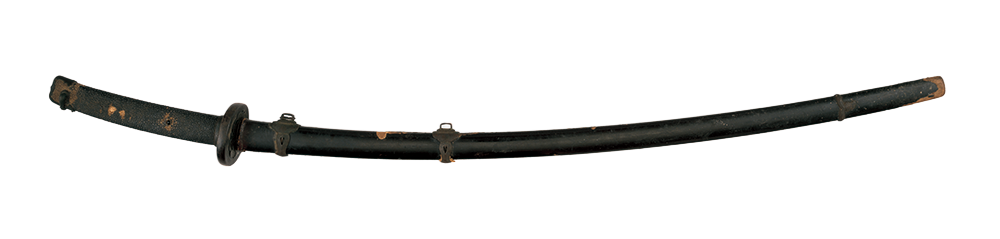
Tachi swords are precursors to the katana. They were commonly carried as weapons of war and markers of status between the ninth and fifteenth centuries.
Unlike katana, which were worn edge-up and thrust through a sash, tachi were worn edge-down and suspended from the waist by hangers joined to metal fittings on the scabbard. This is because tachi were designed for use on horseback.
The earliest scabbards were inlaid with long, cylindrical fittings called nagakanamono, which were usually adorned with openwork carvings or precious gems. These ornate fittings were eventually replaced by pairs of thin metal bands (harubigata) and, from the 1200s onward, single tapered bands with heart-shaped openings (heijigata).
Tachi Dress Swords
In Japan, the right to carry a sword was determined by social status. Tachi were symbols of authority and part of the everyday uniform of the imperial court. The ceremonial tachi worn by court officials were highly ornamented, sheathed in rosewood scabbards adorned with mother-of-pearl, gold or silver inlay, fine carving, and lacquerwork. Like the court system itself, the design of tachi dress swords was heavily influenced by Chinese culture.
Tachi Military Swords
Tachi originated as weapons of war, and the Kasugataisha Museum has several tachi that were designed for combat. These swords tended to have darkly lacquered scabbards and were less ornate than the dress swords given as gifts or worn during formal occasions.