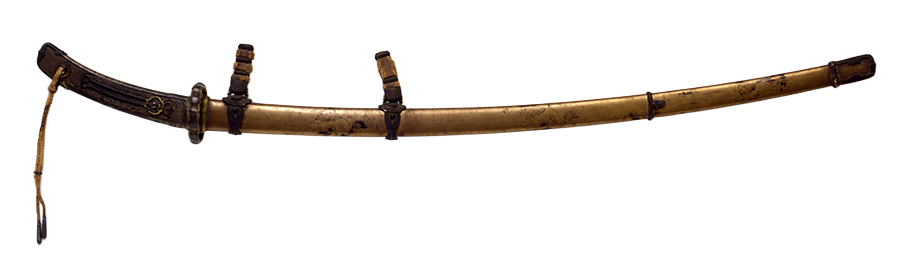
Tachi Sword with Chinese Lions and Kenukigata-Style Mounting
This tachi sword was discovered in the ceiling of Kasugataisha Shrine’s Treasure House in 1939. The blade dates to the Heian period (794–1185) and would have originally been fitted with an openwork hilt that resembled tweezers (kenuki). Now, the blade is fitted with a decorative hilt (menuki) that retains the tweezer-shape in its design but lacks an opening. This style was popularized in the Kamakura period (1185–1333), centuries after the blade was forged. This suggests the sword may have been a family heirloom that received new fittings before it was presented to Kasugataisha Shrine.
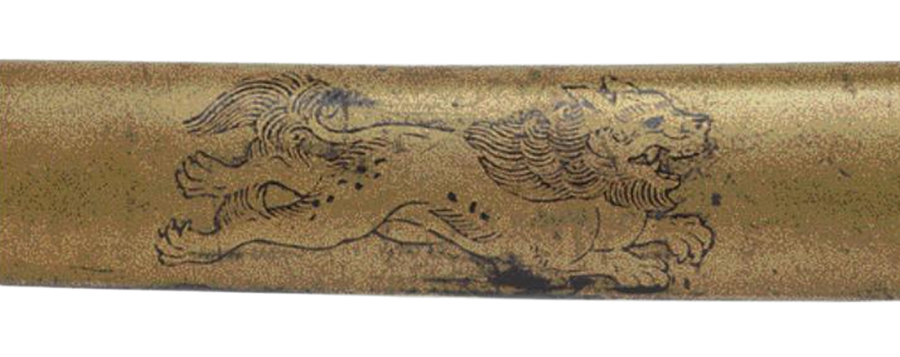
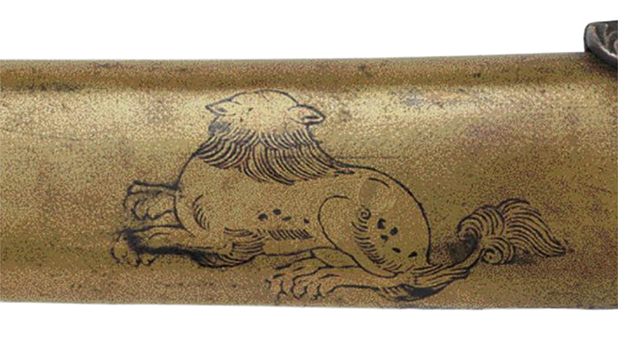
The scabbard is adorned with six mythical Chinese lions (shishi). Each lion is drawn using kakiwari, a decorative maki-e (sprinkled gold powder on lacquer) technique in which outlines are depicted by leaving gaps in the lacquer coating. First, the lions were drawn on thin paper and transferred to the surface of the scabbard. Lacquer was then carefully applied to the space around the linework, and powdered gold was evenly sprinkled over the design. When the excess powder was brushed away, the bold lines of the lions were revealed underneath.
The orientation of the lions near the hilt demonstrates particular attention to detail. One side of the scabbard depicts a lion from the front, while the opposite side depicts a lion from the back.